Pepper X vs Carolina Reaper: Which Pepper Is Hottest?
Peppercorns and Chilli Peppers: What Is the Difference?
The word “pepper” can describe two very different ingredients. Black pepper comes from dried peppercorns of Piper nigrum, while chilli peppers belong mainly to the Capsicum genus and contain capsaicin. This guide focuses on chilli peppers and their heat.
Black, green and white peppercorns can come from the same Piper nigrum plant. Their colour and flavour depend mainly on harvest time and processing: green peppercorns are unripe, black peppercorns are dried with the outer layer intact, and white pepper is made from ripe berries with the outer layer removed.
Chilli powders, flakes and sauces are made from Capsicum fruits rather than peppercorns. Hundreds of cultivars range from sweet peppers with no measurable heat to superhot varieties exceeding two million Scoville Heat Units.
What Is the Scoville Scale?
The Scoville scale expresses the pungency of chilli peppers and chilli products in Scoville Heat Units (SHU). A higher number generally indicates a greater concentration of capsaicinoids.
Wilbur Scoville introduced the original sensory test in 1912. Because human tasters made the method subjective, modern laboratories use High-Performance Liquid Chromatography (HPLC) to measure capsaicinoids more consistently and convert the result into SHU.

Some of the World’s Hottest Chilli Peppers
From aromatic Habaneros to record-breaking Pepper X, these varieties illustrate the upper end of the chilli heat spectrum. SHU values are approximate ranges because growing conditions and individual pods can vary.
Habanero Pepper – Typically 100,000 to 350,000 SHU
Habanero peppers belong to Capsicum chinense and are known for floral, tropical-fruit aromas as well as serious heat. Although far below modern superhots, a Habanero is still many times hotter than a Jalapeño.
Habanero is available in sauces, powders and dried forms. Its fruity flavour pairs well with mango, pineapple, citrus and tomato. Start with a small quantity: even though it is not a record-holder, it remains extremely hot for an inexperienced chilli eater.
Ghost Pepper (Bhut Jolokia) – Around 800,000 to 1,041,000 SHU
The Ghost Pepper comes from north-eastern India and was officially recognised as the world’s hottest chilli before later superhots surpassed it. Its heat builds slowly and lingers, while the flavour can be smoky, fruity and slightly sweet. Wear gloves and keep it away from eyes and sensitive skin.
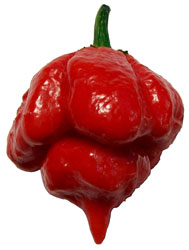
Trinidad Scorpion – Approximately 1,200,000 to 2,000,000 SHU
The Trinidad Scorpion family originates in Trinidad and Tobago. Many pods develop a pointed “stinger” that inspired the name. These peppers combine exceptional heat with fruity Caribbean aromas and have appeared among former world-record holders. Use powders only with good ventilation and careful handling.
H πρώην πιο καυτερή πιπεριά στον κόσμο! Η καυτερή πιπεριά Carolina Reaper (2.000.000+ Scoville units)
Carolina Reaper held the Guinness World Record from 2013 until Pepper X was recognised in 2023. Its official average is around 1.64 million SHU, with individual pods measured above two million. Beneath the extreme heat lies a fruity sweetness that works in carefully formulated sauces. Products made with Carolina Reaper require tiny portions, gloves during direct handling and strict attention to the label.
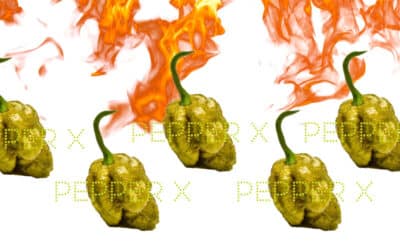
H πιο καυτερή πιπεριά στον κόσμο! Η καυτερή πιπεριά Pepper X (2.693.000+ Scoville units)
Pepper X is the chilli officially recognised by Guinness World Records as the world’s hottest. It was developed by Ed Currie of the PuckerButt Pepper Company, who also created the Carolina Reaper.
Pepper X recorded an official average of 2,693,000 SHU—not 3.18 million. Reports describe earthy and fruity flavours beneath an exceptionally intense, long-lasting burn. It is intended for specialist products and should never be treated as an ordinary cooking pepper.
How Superhot Peppers Are Used in Products
Hot Sauces
Superhot chillies appear in sauces, barbecue condiments, mustards, marinades and seasonings. Producers balance their intensity with tomato, fruit, citrus, spices, smoke and even coffee. Choose products by heat level and intended use rather than by pepper name alone, because recipes and extract content can change the experience dramatically.
Chilli Peppers & Ground Chilli
Chilli heat also works in crisps, popcorn, peanuts, almonds and chocolate. Fat, sugar and starch can soften the perception of heat while highlighting a pepper’s fruity or smoky notes. Always check the stated heat level before serving a product to someone else.
Chilli Peppers & Ground Chilli
Dried peppers, chilli flakes and powders provide year-round flavour and are easy to dose—provided you start with a very small pinch. Store them sealed, avoid inhaling airborne powder and wash hands and utensils thoroughly after handling superhot varieties.